Writer's & GM Screen
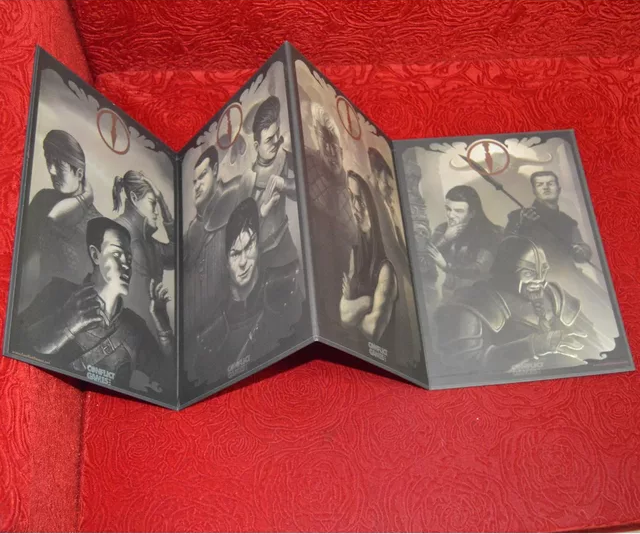
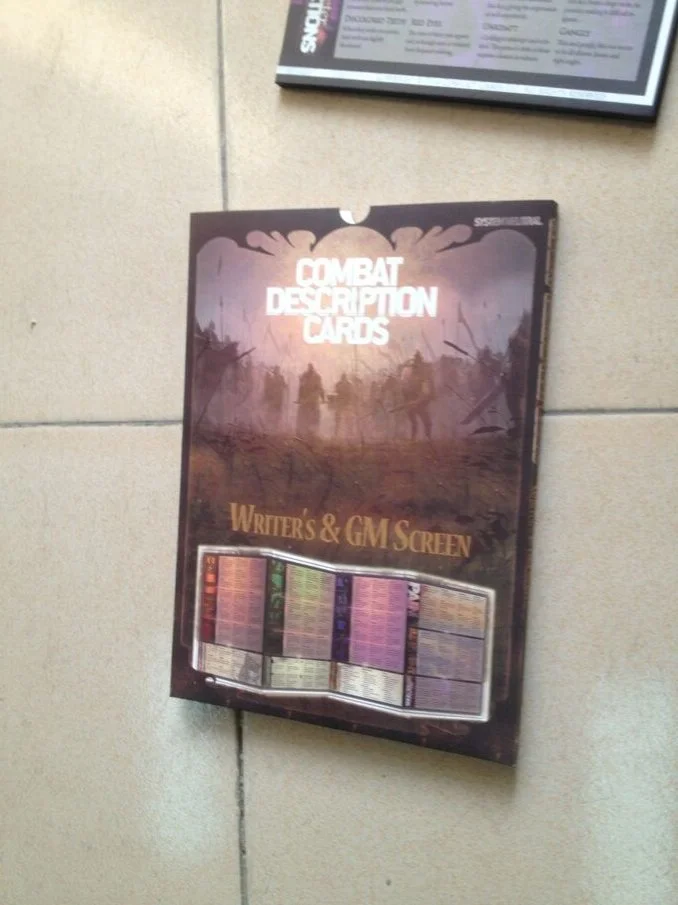
This beautiful 4-panel screen features magnificent art by Rafael Dorsz on the outer panels. On the inside you will find hundreds of inspirational examples of ways you can describe characters in intense fantasy combat. Strategically organized by the type of damage the character wishes to inflict and the fighting style the character is performing. Also included is additional content from the ‘Description Cards Storytelling Deck

A beautiful 4-panel screen which surrounds you with inspiration!
Combat Descriptions Broken down into these three categories:
This beautiful 4-panel screen features magnificent art by Rafael Dorsz on the outer panels. On the inside you will find hundreds of inspirational examples of ways you can describe characters in intense fantasy combat. Strategically organized by the type of damage the character wishes to inflict and the fighting style the character is performing. The types of damage include: BLUNT—Damage caused by non-penetrating force; SLASHING—Damage caused by a sharp edge; and PIERCING—Damage caused by a sharp point. The combat styles include: FINESSE—A character who fights with style and grace, such as the Swashbuckler or Martial Artist; POWER—A character whose fight is based on strength and vigor, such as the Barbarian or Thug; and RANGE—A character who is using a thrown or distance weapon such as a javelin or bow.
Plus Additional descriptions from the ‘Description Cards Storytelling Deck
-----------------------------------------------------------------
Ill Intent Cards: (A handful of descriptions)
We Love Villains.
Certain keywords like "murderous" carries with it ill intent. You will find herein, inspiring and unique ways to describe the wicked, foul or villainous characters in your story with the simple use of key venomous words. Each keyword comes with two brief examples. The first, an example introduction of a character using the keyword and the second example illustrates an assault using the same keyword. Use both examples to set the tone of your villain or antagonist.
-----------------------------------------------------------------
Expressions Cards: (A handful of descriptions)
Expressions, Emotions, Reactions and Feelings.
Each card contains a list of physical and emotional clues characters can display while experiencing feelings, such as anxiety or fear. This set of tarot-sized cards helps address one of the prevalent challenges for writers: How to put into words a person's emotional state and how this emotional state might manifest itself physically. Each card contains an emotion or expression along with a series of bodily signs that will give your audience a unique, compelling way to understand the emotion.
-----------------------------------------------------------------
Character Distinctions Cards: (A handful of descriptions)
The First Step to Making Your Characters Instantly Memorable.
Rather than giving your audience a long, detailed description of a character’s height, build, facial features, and clothing, it’s best to just show the “essence” of the character, including his personality or state of mind, as perceived by the viewer, through a few well-chosen details. These well-chosen details are presented in tarot-card sized cards that list adjectives, keywords and example descriptions on how to creatively use them all.
-----------------------------------------------------------------
Environment Cards: (A handful of descriptions)
Describe Memorable Landscapes
It’s important to give your audience (readers or fellow gamers) a sense of place. That is, a landscape they can identify with and/or visualize. The difficultly here is placing a feature, a moment or a mark on the landscape that's memorable and (more importantly) indigenous to the landscape. This is exactly what these cards provide--distinguishable moments, marks and features of the following landscapes: Swamps, Mountains, Deserts/Plains and Forests. Yep, thoughtful descriptions of sights smells, sounds and sensations from mountains, swamps, deserts and forests.
-----------------------------------------------------------------
Pain Cards: (A handful of descriptions)
How Do You Describe Pain?
Find scores of well-written examples and key words on how to describe various levels of pain to your audience. For writers and Gamemasters (GMs) it's difficult to convey pain, and even specific types of pain, to an audience who's comfortably sitting at home in an easy chair or around a gaming table. The Pain Cards attempt to help writers, storytellers and GMs in this regard by providing adjectives and key words that can be used to convey pain. With each word there are two separate examples on the use of the words--one example more severe than the next. Use these keywords and inspiring examples to covey pain in a unique and compelling way.
-----------------------------------------------------------------
Labyrinth Cards: (A handful of descriptions)
Great help on Describing Labyrinths, dungeon and underground settings. The difficulty with an underground setting such as a dungeon, is after a short while the rooms and halls begin to sound similar. This is normally because it is hard to come up with fresh distinguishable features for every room and hallway. Coming to the rescue, are these 12 cards. In these cards you will find dozens of examples which describe noteworthy moments, marks and clues in the underground, dungeons or labyrinths.
Improve Your Combat Narrative and Storytelling at a Glance!
A beautiful 4-panel screen which surrounds you with inspiration!
Combat Descriptions Broken down into these three categories:
This beautiful 4-panel screen features magnificent art by Rafael Dorsz on the outer panels. On the inside you will find hundreds of inspirational examples of ways you can describe characters in intense fantasy combat. Strategically organized by the type of damage the character wishes to inflict and the fighting style the character is performing. The types of damage include: BLUNT—Damage caused by non-penetrating force; SLASHING—Damage caused by a sharp edge; and PIERCING—Damage caused by a sharp point. The combat styles include: FINESSE—A character who fights with style and grace, such as the Swashbuckler or Martial Artist; POWER—A character whose fight is based on strength and vigor, such as the Barbarian or Thug; and RANGE—A character who is using a thrown or distance weapon such as a javelin or bow.
Plus Additional descriptions from the ‘Description Cards Storytelling Deck
-----------------------------------------------------------------
Ill Intent Cards: (A handful of descriptions)
We Love Villains.
Certain keywords like "murderous" carries with it ill intent. You will find herein, inspiring and unique ways to describe the wicked, foul or villainous characters in your story with the simple use of key venomous words. Each keyword comes with two brief examples. The first, an example introduction of a character using the keyword and the second example illustrates an assault using the same keyword. Use both examples to set the tone of your villain or antagonist.
-----------------------------------------------------------------
Expressions Cards: (A handful of descriptions)
Expressions, Emotions, Reactions and Feelings.
Each card contains a list of physical and emotional clues characters can display while experiencing feelings, such as anxiety or fear. This set of tarot-sized cards helps address one of the prevalent challenges for writers: How to put into words a person's emotional state and how this emotional state might manifest itself physically. Each card contains an emotion or expression along with a series of bodily signs that will give your audience a unique, compelling way to understand the emotion.
-----------------------------------------------------------------
Character Distinctions Cards: (A handful of descriptions)
The First Step to Making Your Characters Instantly Memorable.
Rather than giving your audience a long, detailed description of a character’s height, build, facial features, and clothing, it’s best to just show the “essence” of the character, including his personality or state of mind, as perceived by the viewer, through a few well-chosen details. These well-chosen details are presented in tarot-card sized cards that list adjectives, keywords and example descriptions on how to creatively use them all.
-----------------------------------------------------------------
Environment Cards: (A handful of descriptions)
Describe Memorable Landscapes
It’s important to give your audience (readers or fellow gamers) a sense of place. That is, a landscape they can identify with and/or visualize. The difficultly here is placing a feature, a moment or a mark on the landscape that's memorable and (more importantly) indigenous to the landscape. This is exactly what these cards provide--distinguishable moments, marks and features of the following landscapes: Swamps, Mountains, Deserts/Plains and Forests. Yep, thoughtful descriptions of sights smells, sounds and sensations from mountains, swamps, deserts and forests.
-----------------------------------------------------------------
Pain Cards: (A handful of descriptions)
How Do You Describe Pain?
Find scores of well-written examples and key words on how to describe various levels of pain to your audience. For writers and Gamemasters (GMs) it's difficult to convey pain, and even specific types of pain, to an audience who's comfortably sitting at home in an easy chair or around a gaming table. The Pain Cards attempt to help writers, storytellers and GMs in this regard by providing adjectives and key words that can be used to convey pain. With each word there are two separate examples on the use of the words--one example more severe than the next. Use these keywords and inspiring examples to covey pain in a unique and compelling way.
-----------------------------------------------------------------
Labyrinth Cards: (A handful of descriptions)
Great help on Describing Labyrinths, dungeon and underground settings. The difficulty with an underground setting such as a dungeon, is after a short while the rooms and halls begin to sound similar. This is normally because it is hard to come up with fresh distinguishable features for every room and hallway. Coming to the rescue, are these 12 cards. In these cards you will find dozens of examples which describe noteworthy moments, marks and clues in the underground, dungeons or labyrinths.
Improve Your Combat Narrative and Storytelling at a Glance!
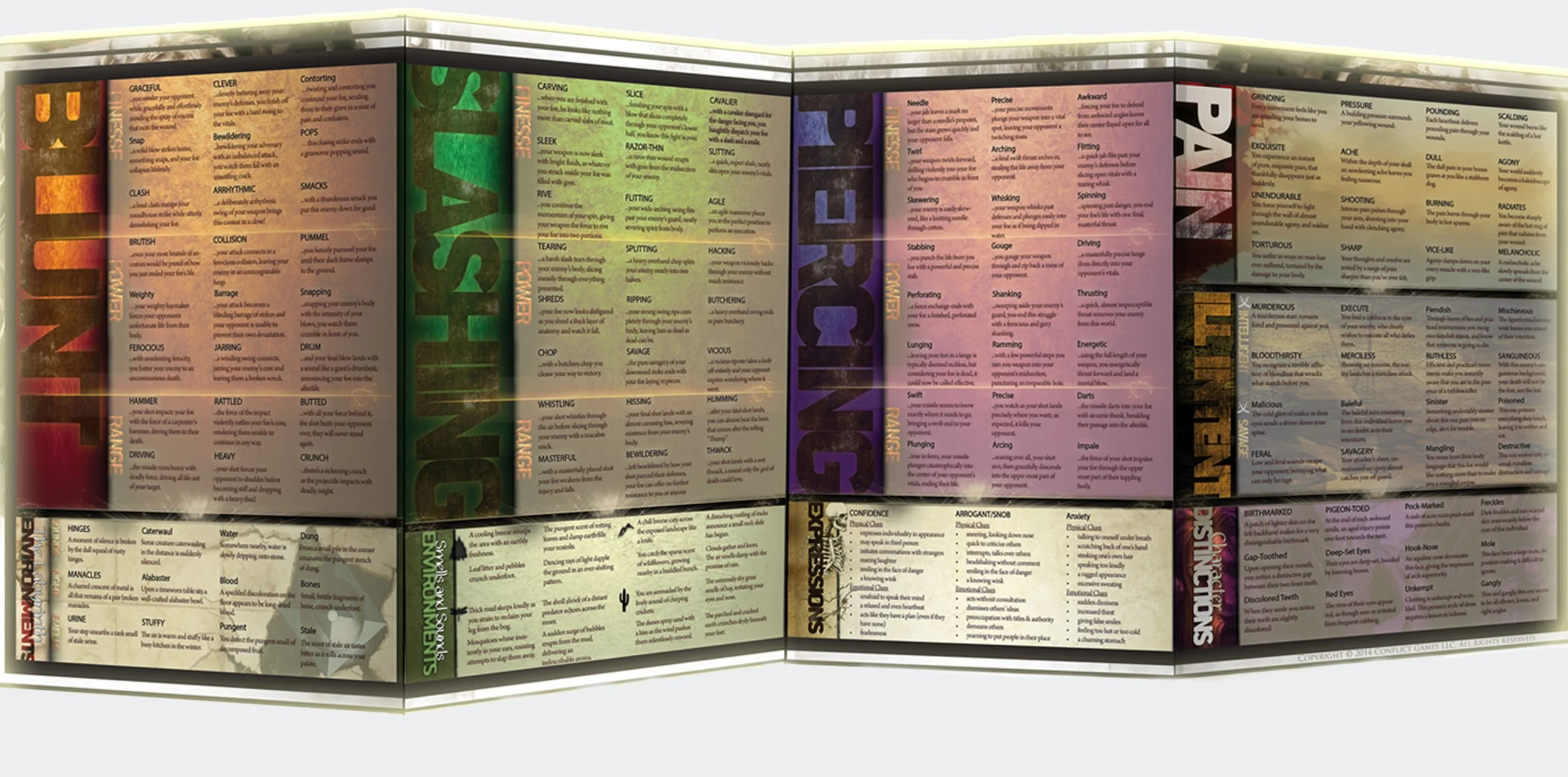
A beautiful 4-panel screen which surrounds you with inspiration!
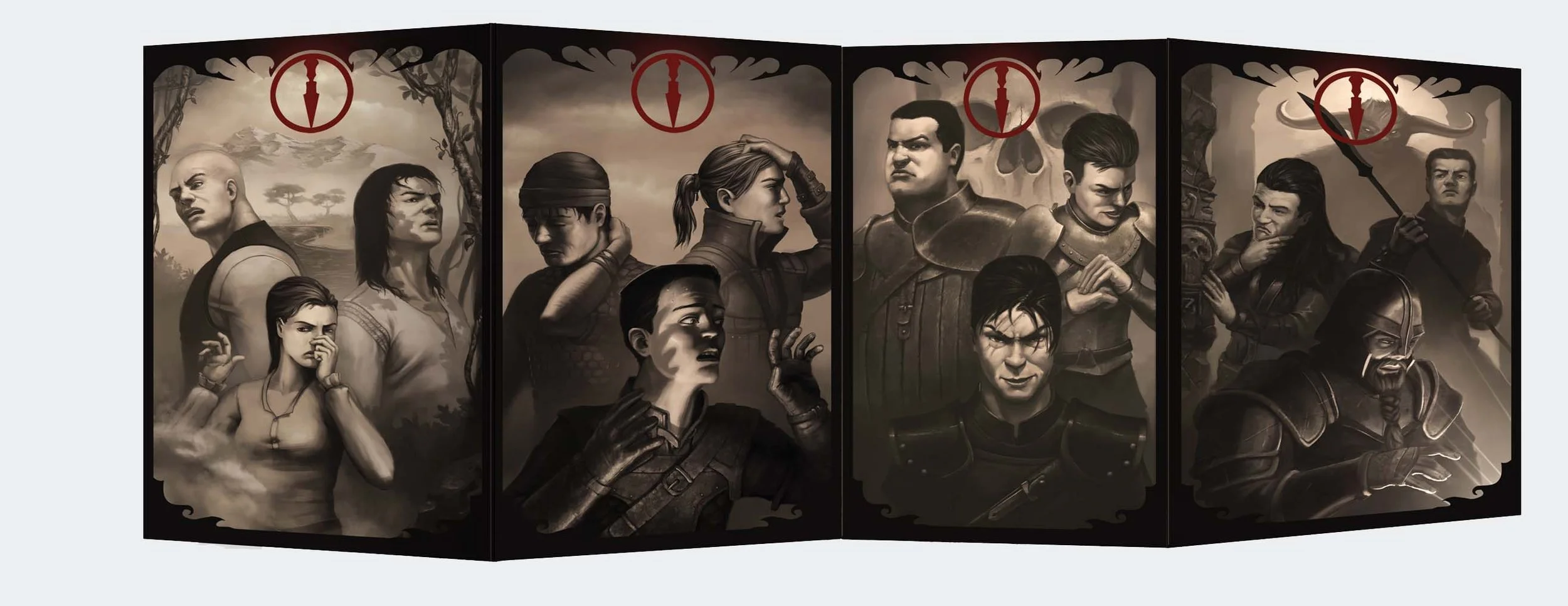
A beautiful 4-panel screen which surrounds you with inspiration!
Combat Descriptions Broken down into these three categories:
This beautiful 4-panel screen features magnificent art by Rafael Dorsz on the outer panels. On the inside you will find hundreds of inspirational examples of ways you can describe characters in intense fantasy combat. Strategically organized by the type of damage the character wishes to inflict and the fighting style the character is performing. The types of damage include: BLUNT—Damage caused by non-penetrating force; SLASHING—Damage caused by a sharp edge; and PIERCING—Damage caused by a sharp point. The combat styles include: FINESSE—A character who fights with style and grace, such as the Swashbuckler or Martial Artist; POWER—A character whose fight is based on strength and vigor, such as the Barbarian or Thug; and RANGE—A character who is using a thrown or distance weapon such as a javelin or bow.
Plus Additional descriptions from the ‘Description Cards Storytelling Deck
-----------------------------------------------------------------
Ill Intent Cards: (A handful of descriptions)
We Love Villains.
Certain keywords like "murderous" carries with it ill intent. You will find herein, inspiring and unique ways to describe the wicked, foul or villainous characters in your story with the simple use of key venomous words. Each keyword comes with two brief examples. The first, an example introduction of a character using the keyword and the second example illustrates an assault using the same keyword. Use both examples to set the tone of your villain or antagonist.
-----------------------------------------------------------------
Expressions Cards: (A handful of descriptions)
Expressions, Emotions, Reactions and Feelings.
Each card contains a list of physical and emotional clues characters can display while experiencing feelings, such as anxiety or fear. This set of tarot-sized cards helps address one of the prevalent challenges for writers: How to put into words a person's emotional state and how this emotional state might manifest itself physically. Each card contains an emotion or expression along with a series of bodily signs that will give your audience a unique, compelling way to understand the emotion.
-----------------------------------------------------------------
Character Distinctions Cards: (A handful of descriptions)
The First Step to Making Your Characters Instantly Memorable.
Rather than giving your audience a long, detailed description of a character’s height, build, facial features, and clothing, it’s best to just show the “essence” of the character, including his personality or state of mind, as perceived by the viewer, through a few well-chosen details. These well-chosen details are presented in tarot-card sized cards that list adjectives, keywords and example descriptions on how to creatively use them all.
-----------------------------------------------------------------
Environment Cards: (A handful of descriptions)
Describe Memorable Landscapes
It’s important to give your audience (readers or fellow gamers) a sense of place. That is, a landscape they can identify with and/or visualize. The difficultly here is placing a feature, a moment or a mark on the landscape that's memorable and (more importantly) indigenous to the landscape. This is exactly what these cards provide--distinguishable moments, marks and features of the following landscapes: Swamps, Mountains, Deserts/Plains and Forests. Yep, thoughtful descriptions of sights smells, sounds and sensations from mountains, swamps, deserts and forests.
-----------------------------------------------------------------
Pain Cards: (A handful of descriptions)
How Do You Describe Pain?
Find scores of well-written examples and key words on how to describe various levels of pain to your audience. For writers and Gamemasters (GMs) it's difficult to convey pain, and even specific types of pain, to an audience who's comfortably sitting at home in an easy chair or around a gaming table. The Pain Cards attempt to help writers, storytellers and GMs in this regard by providing adjectives and key words that can be used to convey pain. With each word there are two separate examples on the use of the words--one example more severe than the next. Use these keywords and inspiring examples to covey pain in a unique and compelling way.
-----------------------------------------------------------------
Labyrinth Cards: (A handful of descriptions)
Great help on Describing Labyrinths, dungeon and underground settings. The difficulty with an underground setting such as a dungeon, is after a short while the rooms and halls begin to sound similar. This is normally because it is hard to come up with fresh distinguishable features for every room and hallway. Coming to the rescue, are these 12 cards. In these cards you will find dozens of examples which describe noteworthy moments, marks and clues in the underground, dungeons or labyrinths.
Improve Your Combat Narrative and Storytelling at a Glance!
A beautiful 4-panel screen which surrounds you with inspiration!
Combat Descriptions Broken down into these three categories:
This beautiful 4-panel screen features magnificent art by Rafael Dorsz on the outer panels. On the inside you will find hundreds of inspirational examples of ways you can describe characters in intense fantasy combat. Strategically organized by the type of damage the character wishes to inflict and the fighting style the character is performing. The types of damage include: BLUNT—Damage caused by non-penetrating force; SLASHING—Damage caused by a sharp edge; and PIERCING—Damage caused by a sharp point. The combat styles include: FINESSE—A character who fights with style and grace, such as the Swashbuckler or Martial Artist; POWER—A character whose fight is based on strength and vigor, such as the Barbarian or Thug; and RANGE—A character who is using a thrown or distance weapon such as a javelin or bow.
Plus Additional descriptions from the ‘Description Cards Storytelling Deck
-----------------------------------------------------------------
Ill Intent Cards: (A handful of descriptions)
We Love Villains.
Certain keywords like "murderous" carries with it ill intent. You will find herein, inspiring and unique ways to describe the wicked, foul or villainous characters in your story with the simple use of key venomous words. Each keyword comes with two brief examples. The first, an example introduction of a character using the keyword and the second example illustrates an assault using the same keyword. Use both examples to set the tone of your villain or antagonist.
-----------------------------------------------------------------
Expressions Cards: (A handful of descriptions)
Expressions, Emotions, Reactions and Feelings.
Each card contains a list of physical and emotional clues characters can display while experiencing feelings, such as anxiety or fear. This set of tarot-sized cards helps address one of the prevalent challenges for writers: How to put into words a person's emotional state and how this emotional state might manifest itself physically. Each card contains an emotion or expression along with a series of bodily signs that will give your audience a unique, compelling way to understand the emotion.
-----------------------------------------------------------------
Character Distinctions Cards: (A handful of descriptions)
The First Step to Making Your Characters Instantly Memorable.
Rather than giving your audience a long, detailed description of a character’s height, build, facial features, and clothing, it’s best to just show the “essence” of the character, including his personality or state of mind, as perceived by the viewer, through a few well-chosen details. These well-chosen details are presented in tarot-card sized cards that list adjectives, keywords and example descriptions on how to creatively use them all.
-----------------------------------------------------------------
Environment Cards: (A handful of descriptions)
Describe Memorable Landscapes
It’s important to give your audience (readers or fellow gamers) a sense of place. That is, a landscape they can identify with and/or visualize. The difficultly here is placing a feature, a moment or a mark on the landscape that's memorable and (more importantly) indigenous to the landscape. This is exactly what these cards provide--distinguishable moments, marks and features of the following landscapes: Swamps, Mountains, Deserts/Plains and Forests. Yep, thoughtful descriptions of sights smells, sounds and sensations from mountains, swamps, deserts and forests.
-----------------------------------------------------------------
Pain Cards: (A handful of descriptions)
How Do You Describe Pain?
Find scores of well-written examples and key words on how to describe various levels of pain to your audience. For writers and Gamemasters (GMs) it's difficult to convey pain, and even specific types of pain, to an audience who's comfortably sitting at home in an easy chair or around a gaming table. The Pain Cards attempt to help writers, storytellers and GMs in this regard by providing adjectives and key words that can be used to convey pain. With each word there are two separate examples on the use of the words--one example more severe than the next. Use these keywords and inspiring examples to covey pain in a unique and compelling way.
-----------------------------------------------------------------
Labyrinth Cards: (A handful of descriptions)
Great help on Describing Labyrinths, dungeon and underground settings. The difficulty with an underground setting such as a dungeon, is after a short while the rooms and halls begin to sound similar. This is normally because it is hard to come up with fresh distinguishable features for every room and hallway. Coming to the rescue, are these 12 cards. In these cards you will find dozens of examples which describe noteworthy moments, marks and clues in the underground, dungeons or labyrinths.
Improve Your Combat Narrative and Storytelling at a Glance!